Electrical systems include many components that work together to deliver reliable power throughout a home. When homeowners schedule service with an electrician in Washington, they may hear technical terms related to panels, wiring, circuits, and electrical safety.
MAD Energy NW helps homeowners understand how their electrical systems operate and how different components affect power delivery. This glossary explains several electrical terms commonly used during inspections, repairs, and system upgrades in homes across Washington.
Electrical terminology often appears during service calls when electricians inspect wiring, diagnose circuit issues, or evaluate electrical panels. Understanding these terms helps homeowners follow recommendations during service visits and recognize when parts of their electrical system may require professional attention.
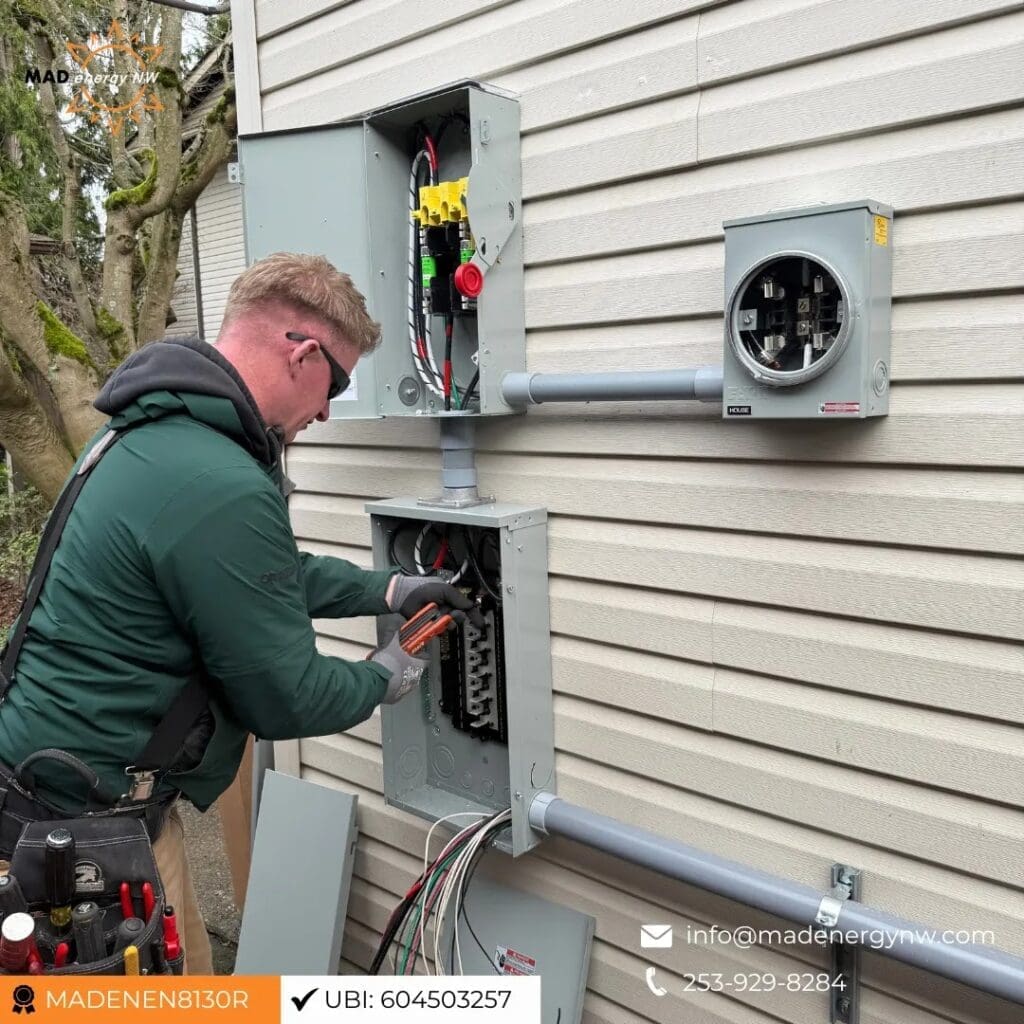
Electrical Panel
The electrical panel is the central distribution point that directs electricity from the utility service to individual circuits throughout the home. It contains breakers that control and protect each electrical circuit.
Circuit Breaker
A circuit breaker automatically shuts off electrical flow when a circuit becomes overloaded or experiences a fault. Breakers help prevent overheating and protect wiring from damage.
Electrical Panel Upgrade
An electrical panel upgrade replaces an older or undersized panel with a modern system that can handle greater electrical demand. Upgrading the panel allows the home to support additional appliances, lighting, or specialized equipment.
Load Capacity
Load capacity refers to the amount of electricity a panel or circuit can safely supply at one time. When electrical demand exceeds this capacity, breakers may trip, or electrical components may experience strain.
Dedicated Circuit
A dedicated circuit supplies electricity to a single appliance or device. High-demand equipment, such as EV chargers or large appliances, often requires a dedicated circuit to operate safely.
AFCI Breaker
An Arc Fault Circuit Interrupter (AFCI) breaker detects dangerous arcing conditions within wiring. When arcing is detected, the breaker shuts off power to reduce the risk of electrical fires.
GFCI Outlet
A Ground Fault Circuit Interrupter outlet monitors electrical flow and shuts off power if an imbalance is detected. These outlets are commonly installed in areas prone to moisture, such as kitchens or bathrooms.
Bus Bar
A bus bar is a conductive metal strip inside the electrical panel that distributes electricity to individual breakers. Each breaker connects to the bus bar to receive power from the main service.
Transfer Switch
A transfer switch safely shifts electrical power between a utility source and a backup generator. This device prevents electricity from flowing in unsafe directions during power outages.
Whole-House Surge Protector
A whole-house surge protector connects at the main electrical panel and helps block sudden voltage spikes before they travel through the home’s electrical circuits. This type of protection helps safeguard appliances, electronics, and other connected equipment.
Voltage Surge
A voltage surge is a sudden increase in electrical voltage that can travel through a home’s wiring. Surges may occur during storms, grid disturbances, or when large appliances cycle on and off.
Electrical Grounding
Grounding provides a safe path for excess electrical energy to travel into the earth. Proper grounding helps stabilize electrical systems and reduces the risk of electrical shock.
Electrical Conduit
An electrical conduit is a protective tube that houses and shields electrical wiring. Conduit helps protect wires from physical damage and environmental exposure.
Knob-and-Tube Wiring
Knob-and-tube wiring is an older wiring method found in some historic homes. It uses ceramic knobs and tubes to route wires through walls and ceilings.
Aluminum Wiring
Aluminum wiring was used in some homes in recent decades as an alternative to copper wiring. Older aluminum wiring systems may require inspection or upgrades to ensure safe electrical connections.
Electrical Service Call
An electrical service call involves diagnosing and repairing problems within a home’s electrical system. Electricians inspect the affected area, determine the cause of the issue, and recommend repairs or upgrades to the system.
Electrical Inspection
An electrical inspection evaluates the condition of a home’s electrical system. Electricians review panels, wiring, outlets, and circuits to confirm they operate safely and meet current electrical standards.
Further Reading:
- When an Electric Panel Upgrade Blows a Fuse: Call a Pro
- Reliable Generator Performance Starts With Proper Electrical Diagnostics
Understanding Your Home’s Electrical System
Electrical terminology can seem complex when homeowners encounter unfamiliar system components during repairs or upgrades. Learning these terms helps homeowners better understand how electricity moves through their homes and how electrical systems maintain safe operation.
A clearer understanding of these components also helps homeowners communicate more effectively with electricians during inspections and service visits. Knowing basic electrical terminology can make it easier to recognize warning signs and understand repair or system upgrade recommendations.
MAD Energy NW provides inspections, repairs, and system upgrades for homeowners who need help diagnosing electrical concerns.
If you have questions about your electrical system or need service from a licensed electrician in Washington, contact MAD Energy NW.