
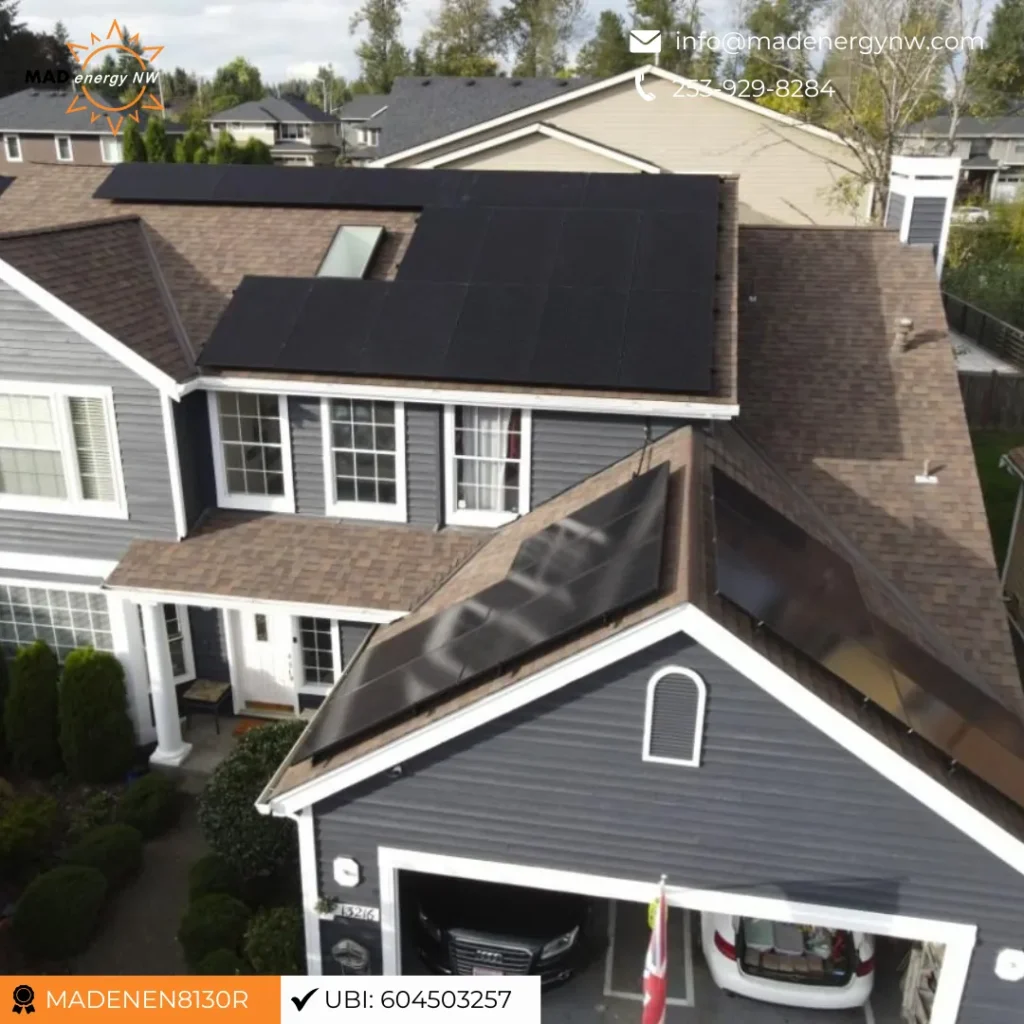
MAD Energy NW works with homeowners throughout Western Washington who notice that solar energy production changes once winter weather sets in. After a residential solar panel installation, overcast skies and shorter daylight hours can reduce solar output to levels lower than those homeowners experience in summer. This shift is expected and driven by environmental conditions, not by the system’s installation.
Solar panels respond to available sunlight, and winter introduces several factors that influence how much energy a system can generate on any given day. Understanding how cloud cover, daylight duration, and seasonal sun angles affect solar output helps homeowners evaluate system performance accurately without assuming something is wrong.
How Overcast Winter Skies Influence Solar Output
Solar panels generate electricity using light, not heat. Even on cloudy days, panels continue to produce energy, but heavy cloud cover reduces the intensity of sunlight reaching the system. During winter, clouds are often thicker and more persistent, which limits the amount of light available throughout the day.
Shorter daylight hours compound this effect. In January, the sun rises later and sets earlier, shrinking the window in which solar panels can generate electricity. The lower winter sun angle also reduces direct exposure, especially on roofs optimized for balanced year-round performance rather than winter-only performance. These environmental factors explain why solar output drops seasonally, even when systems are operating as designed.
Seasonal Change Does Not Indicate a System Problem
MAD Energy NW often speaks with homeowners who worry that reduced winter output signals an issue with their solar system. Seasonal variation is a normal characteristic of solar energy production, particularly in Western Washington. A solar system is designed to perform across an entire year, not to maintain identical output levels in every season.
During summer months, longer days and clearer skies often allow systems to produce more electricity than a household uses. That surplus becomes meaningful later in the year when winter conditions limit daily production.
The Role of Net Metering During Winter Months
Net metering is critical to the year-round performance of residential solar systems in Washington State. When a home’s solar system produces more power than is needed at the time, the unused electricity is sent back through the utility connection. The homeowner receives credits that can be applied later.
During overcast winter days, when solar output is lower, those credits help offset electricity drawn from the grid. MAD Energy NW highlights net metering as a way to evaluate solar performance over the full year rather than judging a system by daily winter production alone.
Battery Storage and Winter Grid Outages
Winter storms can increase the risk of power outages, making battery storage more relevant. Battery systems capture electricity produced by the solar array and supply power automatically when the utility connection is interrupted. They are designed specifically for emergency use during outages.
Battery storage is not intended for nightly use or to compensate for cloudy days. MAD Energy NW prioritizes battery storage when discussing outage resilience, so homeowners clearly understand its role during winter weather events without expecting it to change everyday solar output.
Why System Design Matters in Winter Performance
Every solar system is designed around a home’s structure, available space, and electrical needs. MAD Energy NW designs residential solar systems using high-quality components and licensed electrical engineering oversight to meet stringent energy and electrical standards.
Roof-mounted systems are often the most cost-effective option, while ground-mounted systems offer additional flexibility when roof space is limited. Standing metal seam roofs are compatible with solar installations and allow secure mounting without compromising the roofing structure. These design considerations help ensure predictable system behavior across seasons, including winter.
Setting Realistic Expectations for Solar Energy
Solar energy delivers value over time rather than through uniform daily output. Winter months typically represent the lowest production period of the year, while summer months often generate surplus energy. This seasonal balance is accounted for during system planning and utility integration.
MAD Energy NW aligns expectations around realistic long-term outcomes. Many homeowners see long-term value in solar development, rather than expect consistent production regardless of weather or season. Evaluating performance across the full year provides a clearer picture of how solar supports household energy use.
Further Reading:
- Generator Maintenance Steps That Matter During Auburn Winters
- Generator Services That Help Maintain Power During Winter
Clear Expectations for Winter Solar Output
Winter cloud cover limits solar energy production because available light is lower, days are shorter, and the sun sits lower in the sky, rather than because of any problem with the installation. When viewed across the full year, solar systems continue to provide value through energy generation, net metering, and optional backup protection.
Schedule a consultation with MAD Energy NW to plan a residential solar panel installation designed for Western Washington’s winter conditions.