A homeowner in Enumclaw recently shared his experience working with MAD Energy NW on what was, at the time, the largest residential solar project the company had completed. His story highlights what can be involved in a high-capacity installation that includes battery storage, electrical upgrades, and participation in Washington incentive programs.
The project reflects how some homeowners approach solar planning when they have significant energy demands and long-term goals for independence from rising utility costs.
A Large Residential Solar Investment
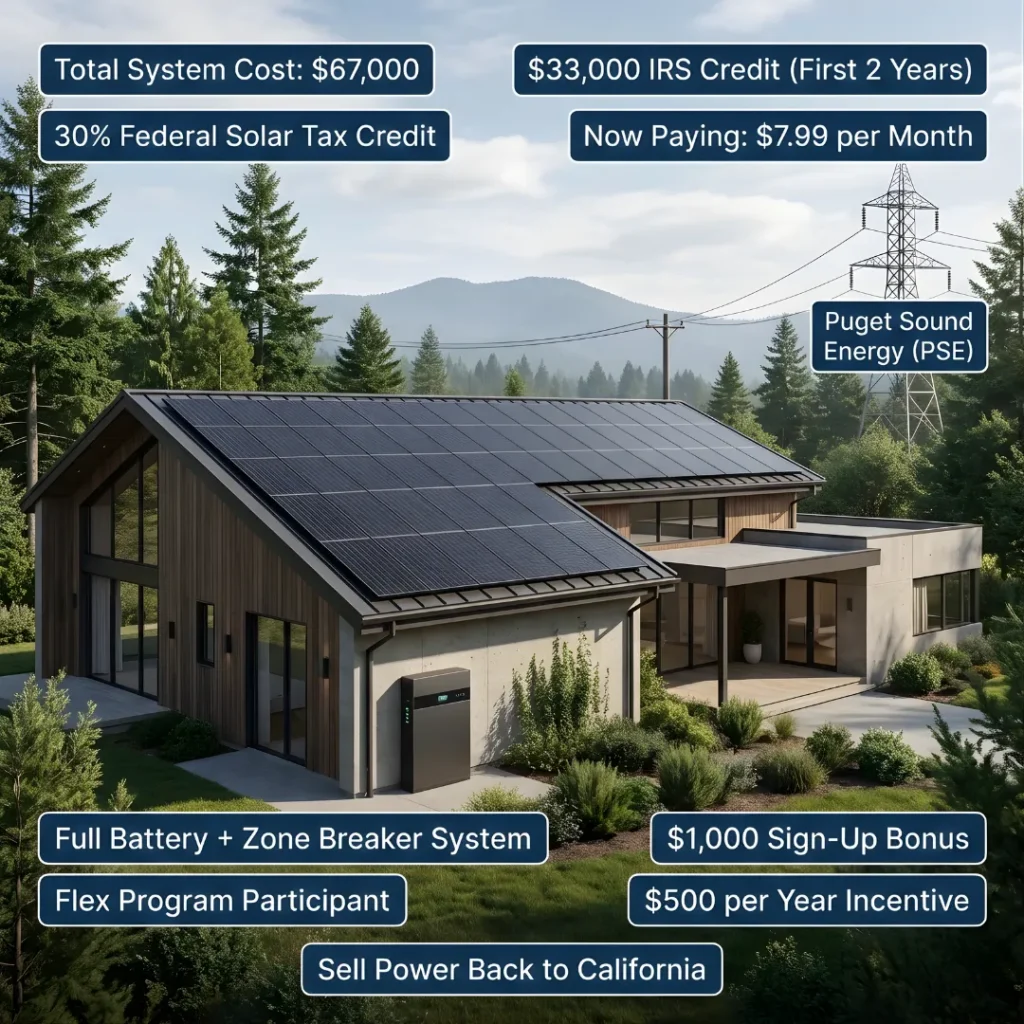
The homeowner explained that his total solar program cost was approximately $67,000. He noted that this figure was higher than what many homeowners would expect because his property required additional components, including an extra breaker box, customized zone selections, and battery installation.
He emphasized that most homes would likely see lower installation costs, often significantly less depending on system size and configuration. His installation represented a large-scale setup designed to meet the needs of a sizable home.
In Washington State, solar installations are exempt from sales tax, and he confirmed that no sales tax was paid on the project.
Federal Tax Credit Impact
The homeowner discussed the federal tax credit currently available for solar installations, which provides a 30 percent tax credit unless federal policy changes before 2032. According to his account, he received approximately $33,000 back from the IRS over the first two years after installation.
That tax credit significantly reduced his effective out-of-pocket cost compared to the original installation price.
While individual tax situations vary, the federal incentive remains one of the primary financial considerations for homeowners evaluating solar in Washington.
Dramatic Change in Monthly Energy Costs
Before installing solar, the homeowner described high energy expenses. After installation, he reported paying only $7.99 per month in utility-related charges instead of approximately $7,800 per month over the last three years.
He stated that his system has nearly paid for itself within three years, with only several thousand dollars remaining at the time of recording. He described his energy as effectively free at this stage of system performance.
Results like these depend heavily on system size, property energy use, and participation in incentives. His experience reflects a large installation paired with significant upfront planning.
Battery Storage and the Flex Program
A key component of this project was battery storage. The homeowner enrolled in a flex program through Puget Sound Energy, which provided a $1,000 enrollment incentive and pays approximately $500 per year for participation.
Through this program, PSE can draw on stored battery energy during periods of high demand or grid stress. The homeowner described this as an additional benefit layered on top of the solar investment.
Battery storage in this context serves two roles: backup power during outages and participation in grid-support programs. Incentive eligibility and program availability may vary based on utility guidelines.
Scale and Customization
This installation included features beyond standard rooftop solar. Electrical upgrades, additional breaker capacity, and zoned power selection were incorporated into the design.
Large residential systems often require detailed load analysis and panel configuration to ensure safe and compliant integration with the existing electrical infrastructure. Projects of this scale typically involve engineered design and licensed electrical installation to meet Washington code requirements.
The homeowner stated that the project exceeded his expectations in execution and results.
Selling Excess Power
The homeowner also mentioned selling power back to California. While grid interactions vary based on utility structures and energy agreements, excess generation in Washington is commonly managed through net metering programs that credit homeowners for surplus production exported to the grid.
Net metering allows solar systems to balance seasonal production differences by applying generation credits against future electricity use.
A Positive Installation Experience
Beyond financial considerations, the homeowner spoke highly of his experience working with MAD Energy NW. He described the company as operating with integrity and transparency and stated that the project exceeded expectations.
He encouraged others considering solar to speak directly with the company’s leadership team to understand system options and design considerations before moving forward.
Considering Solar at Scale
This Enumclaw project illustrates that a large residential solar installation can include more than just panels. Battery storage, electrical panel upgrades, tax incentives, and grid participation programs can all contribute to overall system performance and cost structure.
Homeowners evaluating solar should consider system size, property energy needs, and long-term planning when reviewing potential installations.
A Homeowner Perspective on Solar Investment
Large-scale residential solar installations can look very different from smaller rooftop systems, particularly when battery storage and incentive programs are included. This Enumclaw homeowner’s experience reflects one approach to combining solar generation, backup storage, and tax benefits in Washington State.
Contact MAD Energy NW to learn how a customized system could align with your property’s energy goals and explore whether a project similar to this homeowner’s experience makes sense for you.