Commercial solar install projects are often planned around reliability rather than ideal sunlight conditions. In Western Washington, frequent cloud cover and seasonal daylight shifts are part of everyday operations, so commercial solar systems must be designed to operate consistently within those realities. MAD Energy NW approaches commercial solar installations with an emphasis on system design, utility interactions, and long-term energy planning that align with real-world business schedules.
Businesses considering a commercial solar installation do not expect continuous solar generation throughout the day. Instead, they are looking for systems that integrate seamlessly with utility services, support predictable energy use, and remain reliable even when sunlight is limited.
Cloudy Conditions Do Not Stop Solar Generation
Cloud cover reduces solar production, but it does not shut systems down. Commercial solar panels continue to generate electricity under diffuse light, though at lower output than on clear days. This operating range is expected and accounted for during system design.
Commercial systems are sized based on average production over time rather than peak conditions alone. This allows businesses to benefit from solar generation during extended cloudy periods without relying on unrealistic performance assumptions.
Solar Panels and Energy Storage Serve Different Roles
Solar panels produce power only while exposed to sunlight, while energy storage is handled separately through battery systems rather than the panels themselves. Energy storage is handled by battery systems, which are designed to provide backup power during grid outages rather than support routine nighttime or cloudy-day operations.
For commercial properties, this distinction matters. Cloudy conditions do not automatically require battery storage. Many businesses rely on the grid during those periods, using solar generation to offset daytime electricity use through net metering.
Net Metering Supports Energy Use Beyond Daylight Hours
Net metering allows excess electricity generated during productive periods to be exported to the grid and credited by the utility. Those credits can then be applied when electricity is drawn from the grid during times of lower solar production.
This structure allows commercial solar systems to remain useful even when panels are not actively producing power. Net metering helps balance energy use across operating schedules without assuming continuous on-site generation.
System Design Is Scaled for Commercial Demand
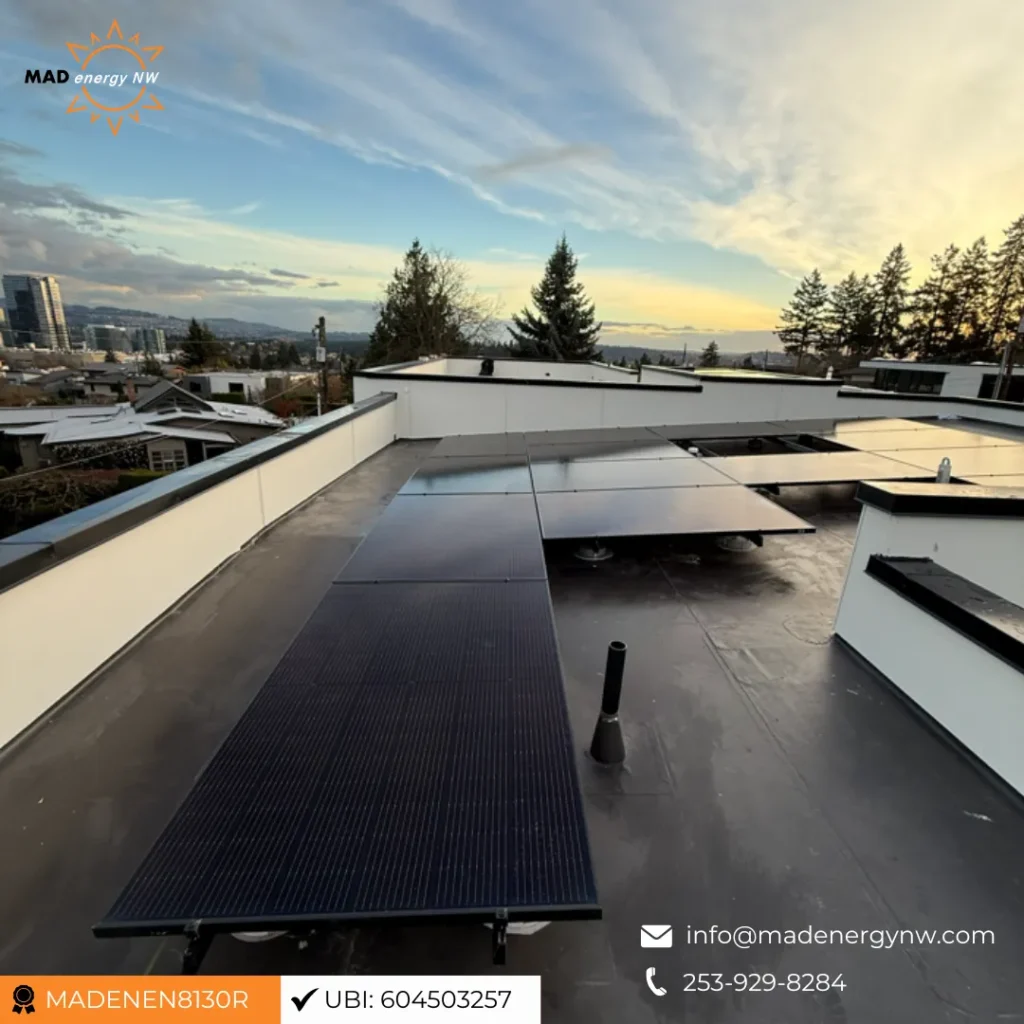
Commercial solar installations differ from residential systems in both size and complexity. Larger roof areas allow for greater panel coverage, which increases overall production potential. In Washington State, systems above a certain capacity are designated as commercial, which affects system planning and eligibility considerations.
Proper system scaling requires understanding how and when a business uses electricity. Facilities with daytime-heavy operations, mixed-use spaces, or extended operating hours impose different demands on a solar system, and these patterns guide the design process.
Reliability Depends on Engineering and Installation Quality
Reliable performance under variable conditions begins with proper design and installation. Commercial solar systems involve multiple integrated components, including panels, inverters, racking, and electrical connections.
All commercial solar projects are designed and stamped by a licensed electrical engineer. Installations are completed by licensed electricians and managed through a structured project process to maintain coordination across design, permitting, and construction phases.
Roof and Site Considerations Affect Long-Term Performance
Commercial roofs vary widely in structure, material, and load capacity. Larger solar systems require careful evaluation of roof conditions before installation begins.
Standing-seam metal roofs are compatible with solar installations and are assessed to ensure mounting systems can be secured without compromising roof performance. For properties where rooftop solar is not suitable, ground-mounted systems may be considered if space allows.
Battery Storage Is Planned Separately for Outage Protection
When battery storage is included in a commercial solar project, it is planned specifically for grid outages. Batteries provide emergency backup power and can be configured to support critical loads during outages.
They are not intended to replace grid power for routine nighttime operations or compensate for cloudy-day production gaps. Clear planning around battery use helps businesses set realistic expectations for system capabilities.
Commercial Solar Performance Is Measured Over Time
Solar performance should be evaluated over months and years rather than individual days. Cloudy periods and seasonal shifts are part of the expected operating environment in Western Washington.
A well-designed commercial solar system delivers value through consistent production, utility interaction, and long-term energy offset rather than daily output peaks.
Further Reading:
- Addressing Common Solar Installation Challenges in Tacoma
- How Bellevue Homes Are Adopting Solar Power
Planning Commercial Solar for Consistent Operations
Commercial solar reliability depends on thoughtful design, realistic expectations, and proper integration with utility service. Cloudy conditions do not reduce the value of a well-planned system when generation, net metering, and outage protection are aligned correctly.
Work with MAD Energy NW to plan a dependable commercial solar install that supports your business operations year-round.