
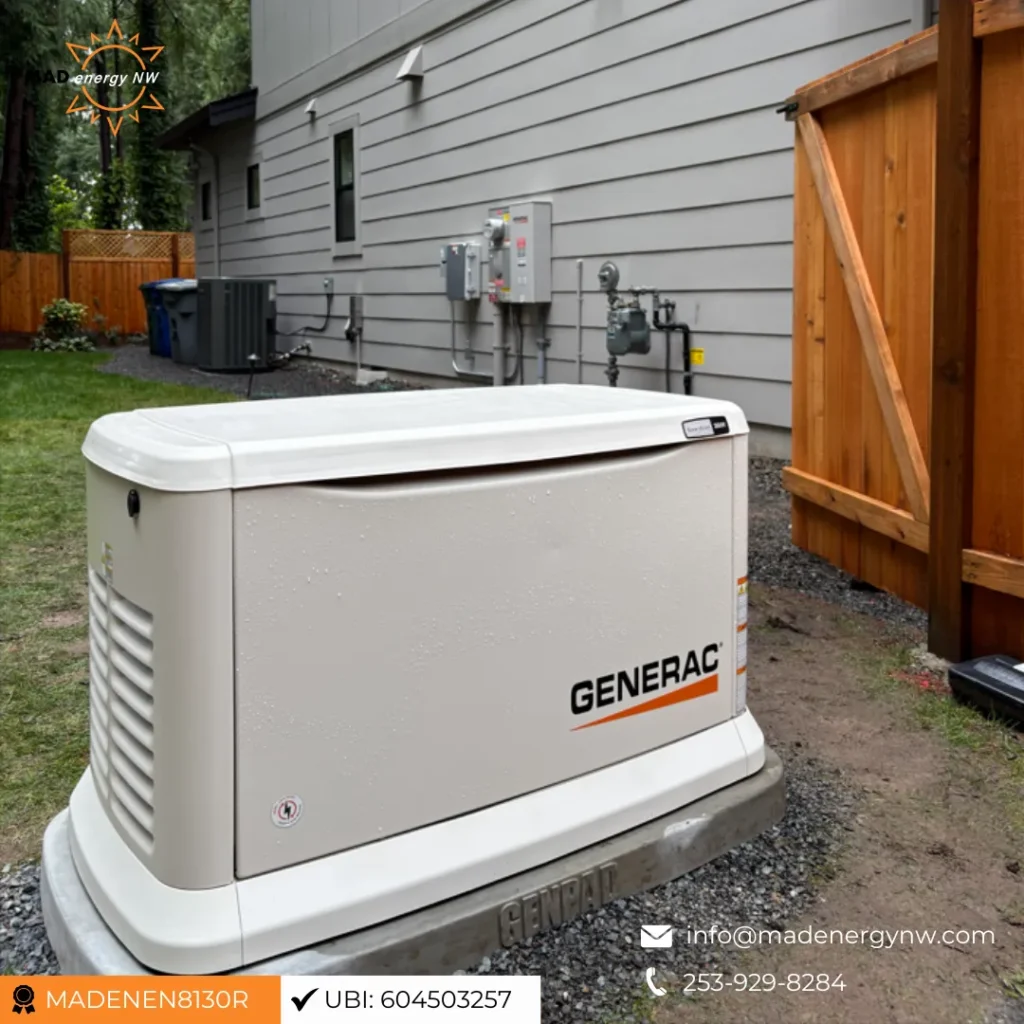
Homeowners and businesses researching backup generator installers often want to understand how load testing fits into the installation process. Load testing is not an optional step or a quick check at the end of a job. It is a critical step in confirming that a generator system can safely support electrical demand and operate as intended during an outage. MAD Energy NW incorporates load testing into its professional generator installation process to verify performance before placing the system into service.
Generators are installed to provide reliable power when utility service is interrupted. Without proper testing under simulated conditions, there is no assurance that the system will perform correctly when needed. Knowing what installers evaluate during load testing helps property owners understand why professional installation matters.
Why Load Testing Is Part of Professional Generator Installation
Load testing verifies that a generator can handle the electrical demand it was selected to support. During this process, the system is evaluated while powering connected circuits to confirm stability, responsiveness, and safe operation.
Professional installation involves more than connecting a generator to a fuel source and an electrical panel. The system must be properly grounded, integrated with the main service, and configured to operate automatically in the event of power loss. Load testing confirms that these components work together under real operating conditions.
Licensed electricians perform load testing to ensure the generator responds correctly when demand changes and that protective devices function as designed.
How Load Calculations Shape Generator Performance
Before load testing occurs, installers perform detailed load calculations. This step determines the generator’s required output and which circuits will be supported during an outage.
Load calculations account for essential systems and equipment that must operate simultaneously. This information guides generator sizing and circuit balancing so the system does not become overloaded during operation.
Accurate load calculation is essential. If the generator is undersized or circuits are not balanced correctly, performance issues may appear during testing or, worse, during an actual outage.
Transfer Switch Testing and System Response
A key part of load testing involves the automatic transfer switch. The transfer switch controls how power flows from the utility to the generator during an outage and back again when utility service is restored.
During testing, installers verify that the transfer switch activates correctly, safely isolates utility power, and transfers the load to the generator without interruption or delay. This process confirms that the generator will start automatically and supply power as intended. Transfer switch testing ensures the system responds consistently and safely during outages.
Simulated Outage Testing Confirms Real-World Readiness
Load testing is often performed under simulated outage conditions. Installers intentionally interrupt utility power to observe how the generator starts, assumes load, and stabilizes output.
This testing phase allows electricians to confirm voltage stability, proper circuit engagement, and smooth operation under demand. Any irregularities can be addressed immediately before the system is approved for use. Simulated testing provides confidence that the generator will perform reliably during an actual outage rather than relying on assumptions.
Code Compliance and Safety Verification
All generator installations and load testing must meet Washington State and National Electrical Code standards. Load testing helps verify that wiring, grounding, and electrical connections comply with these requirements.
Inspectors often review generator systems after installation. Proper load testing supports a smooth inspection process by demonstrating that the system has been configured and tested correctly.
Code compliance is not just about passing inspection. It ensures long-term safety and reliable operation throughout the generator system’s life.
Fuel System and Electrical Integration Checks
Generators rely on properly configured fuel systems and electrical connections to operate safely. Load testing verifies that fuel-related electrical components function correctly under load.
Installers confirm that wiring, grounding, and connections remain stable while the generator is running. This process reveals potential problems that would remain hidden when the system is not operating under load.
Why Professional Oversight Matters During Testing
Load testing requires technical expertise and an understanding of how electrical systems behave under demand. Licensed electricians monitor system response and make adjustments as needed to ensure safe operation.
Professional oversight ensures that testing results are accurate and that the system is configured to match the property’s actual power needs. This level of evaluation cannot be replicated through visual checks or basic startup procedures.
What Property Owners Gain From Proper Load Testing
When load testing is completed correctly, property owners gain confidence that their generator system will operate reliably during an outage. The system has been evaluated under conditions that reflect real use rather than theoretical performance.
This process helps prevent unexpected issues during emergencies and supports long-term system reliability. Load testing also ensures that future maintenance and inspections begin from a verified baseline.
Further Reading:
- Understanding Home Electrical Panel Upgrades in Washington
- EV Charger Installation in Redmond: Planning Before Purchase
Preparing for Reliable Backup Power Performance
Load testing confirms that a generator system is ready to perform when utility power is lost. From load calculation to simulated outage testing, each step supports safe, dependable operation under real conditions.
Contact MAD Energy NW to learn what qualified backup generator installers should provide when testing and commissioning a generator system.