
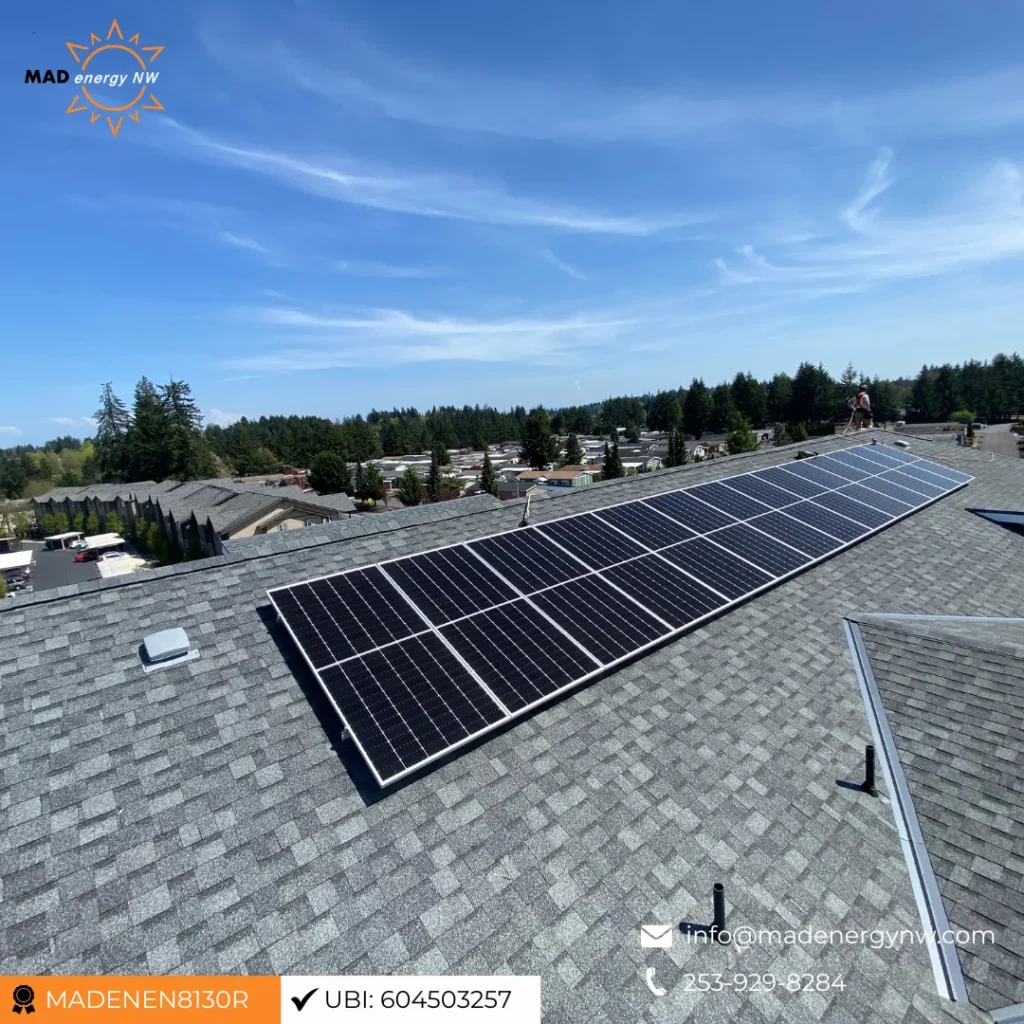
MAD Energy NW works with homeowners in Everett who want solar systems that perform reliably year-round, including during the winter months when daylight hours are shorter and weather conditions change. Winter introduces specific design considerations that affect how a system is planned, installed, and evaluated. A properly designed solar panel installation in Everett accounts for these seasonal factors from the beginning rather than treating winter performance as an afterthought.
Solar panels operate based on available light, and winter conditions influence how much sunlight reaches a system on any given day. Cloud cover, lower sun angles, and surrounding obstructions can all affect output. Design decisions made before installation play a key role in how well a system adapts to these conditions over time.
Understanding Winter Sun Angles in Everett
During winter, the sun travels a lower path across the sky compared to the summer months. This change affects how sunlight reaches rooftops and ground-mounted systems throughout the day. Panels that receive strong summer exposure may experience reduced direct light in winter if orientation and placement are not carefully considered.
MAD Energy NW evaluates roof orientation, pitch, and available mounting locations to account for winter sun angles. This assessment helps determine how panels should be positioned to capture the most consistent light across seasons, rather than focusing solely on peak summer production.
Evaluating Shading Patterns During Colder Months
Shading is one of the most important factors to consider when planning solar in winter. Trees, nearby structures, and roof features can cast longer shadows when the sun sits lower in the sky. These shading patterns often differ significantly between summer and winter.
A thorough site evaluation looks at how shadows move across the property during the winter months. MAD Energy NW considers these seasonal shading patterns during system design so panel placement reflects real conditions rather than assumptions based on summer sunlight alone.
Roof and Ground System Options for Winter Performance
Most residential solar systems in Everett are roof-mounted, but there are other options. Roof-mounted systems can be cost-effective and efficient when roof orientation and exposure are favorable. Standing metal seam roofs are compatible with solar installations and allow secure mounting without compromising roofing materials.
Ground-mounted systems may be considered when roof space is limited or when shading affects rooftop areas more heavily during winter. Ground systems can be positioned to avoid obstructions and allow flexible placement that accounts for seasonal sun angles. MAD Energy NW evaluates both options to determine what aligns with the property and energy goals.
System Layout and Panel Arrangement
Panel layout affects how a system responds to partial shading and variable light conditions. The arrangement of panels across available space influences how sunlight is captured throughout the day, especially in winter when exposure windows are shorter.
MAD Energy NW designs panel layouts that reflect both daily and seasonal light patterns. This planning helps reduce the impact of temporary shading and supports steadier performance during winter months without overstating expectations.
Inverters and Electrical Design Considerations
A solar system includes more than panels alone. Inverters convert electricity into a form usable by the home, and electrical connections integrate the system with the utility grid. These components must be selected and configured to support consistent operation during variable winter conditions.
MAD Energy NW uses solar equipment designed and certified by a licensed electrical engineer. Systems are built to meet strict energy and electrical standards, ensuring reliable operation during Everett’s cooler, cloudier months.
Net Metering and Seasonal Energy Balance
Net metering helps balance seasonal changes by allowing solar systems to offset lower winter production with energy credited earlier in the year. When a solar system produces more power than a household needs at the time, the unused electricity is sent through the utility connection and applied as a credit.
Those credits can offset electricity drawn from the grid during winter, when solar production is naturally lower. MAD Energy NW includes net metering in system planning, so homeowners evaluate performance across the full year rather than focusing on winter output alone.
Battery Storage for Winter Outage Planning
Winter storms can increase the risk of power outages. Battery storage may be included with a solar system to supply power when the utility grid is unavailable. Batteries store electricity generated by solar panels and supply power during outages.
Battery systems are intended for emergency backup only, not for daily nighttime use or to compensate for cloudy conditions. MAD Energy NW emphasizes this distinction to help homeowners understand how battery storage fits into winter planning without disrupting normal solar operation.
Further Reading:
- Why High-Efficiency Panels Are Commonly Selected for Solar Installations in Olympia
- Factors That Contribute to Reliable Solar Panel Installation for Everett Homeowners
Planning Solar With Winter Conditions in Mind
Winter conditions in Everett influence how solar systems perform, but they do not prevent solar from providing long-term value. Thoughtful design decisions regarding sun angles, shading, system layout, and electrical integration help ensure the system is prepared for seasonal changes. MAD Energy NW approaches every project with local conditions in mind, accounting for winter factors during the design phase rather than reacting after installation.
Contact MAD Energy NW to plan a solar panel installation in Everett designed for winter conditions.