
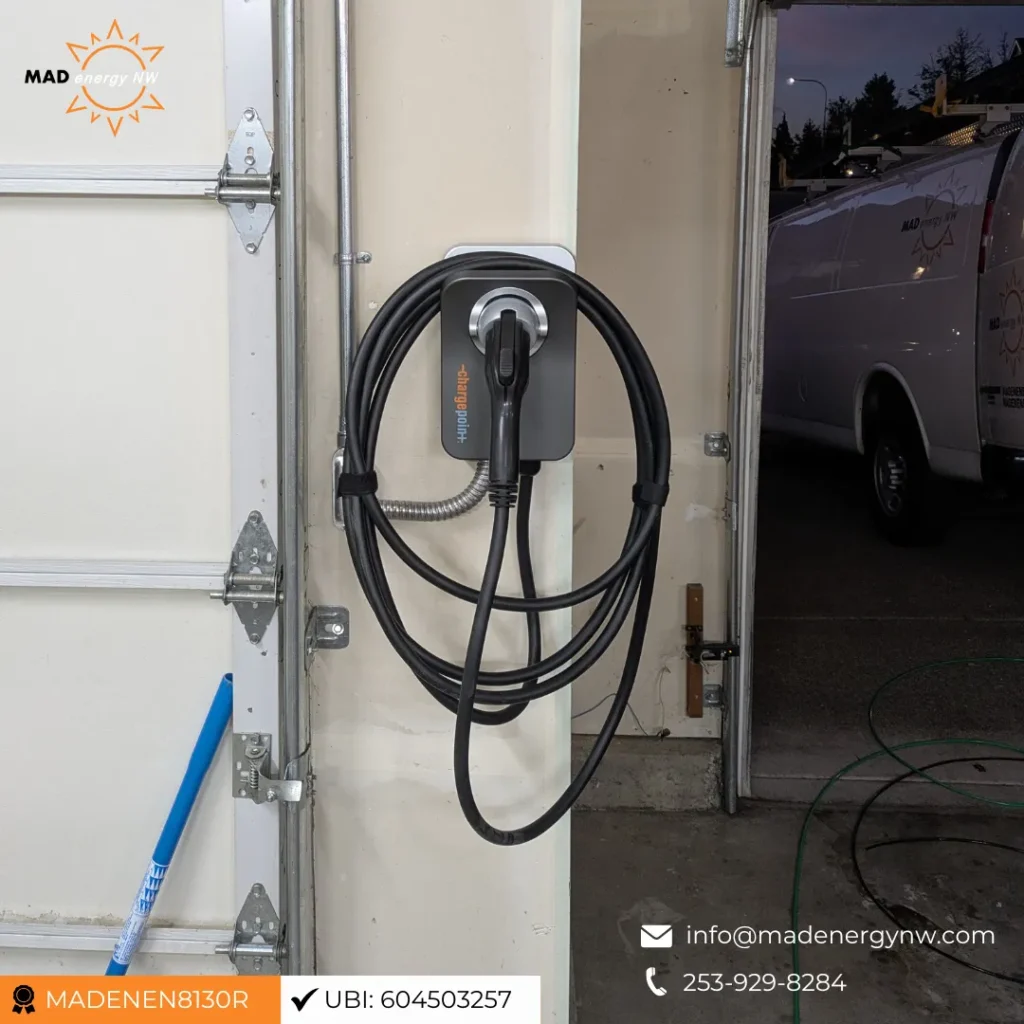
Electric vehicle adoption continues to grow across South King County, and many homeowners are preparing their properties for reliable charging. Working with an experienced electrician in Kent WA, helps ensure EV chargers operate safely and consistently. MAD Energy NW evaluates wiring, circuit capacity, and panel configuration to support dependable home charging systems.
Level 2 charging equipment operates at higher voltage and current than typical household receptacles. Because of this added load, circuits and wiring must be evaluated before installation. Checking the existing electrical system helps confirm it can safely support the charger.
Level 1 vs. Level 2 Charging
Level 1 charging typically connects to a common household receptacle and delivers a slower rate of charge. These setups use less electrical current but may not fully replenish a vehicle between daily trips. For quicker turnaround, many homeowners choose to upgrade to Level 2 equipment.
Level 2 chargers operate on dedicated circuits and higher voltage. This setup allows quicker charging but increases electrical demand. Proper installation ensures safe operation.
Why Panel Capacity Matters
Some existing electrical panels were not sized for the added demand of Level 2 charging. When available capacity is limited, the system may experience breaker trips or inconsistent charging output. These signs suggest the electrical setup should be reviewed.
MAD Energy NW reviews panel capacity and load distribution. If necessary, upgrades may be recommended to support additional demand. This planning helps prevent overload conditions.
Regional “Grid-Load” Advice for Kent and Renton
Many Kent and Renton neighborhoods were built before Level 2 EV charging was common, so panel capacity is often limited. Homeowners should first check whether their panel has available breaker space and sufficient amperage before selecting a charger. Installing equipment without verifying capacity can lead to frequent breaker trips or reduced charging performance.
If the panel is near capacity, adding a dedicated circuit may require redistributing existing loads. This helps prevent high-demand appliances from competing with the charger. Evaluating load balance early can reduce the need for later modifications.
Homes with detached garages or long wiring runs may also require heavier conductors. This prevents voltage drop and supports consistent charging speeds. Planning wiring routes before installation helps ensure stable performance.
Common EV Charging Electrical Issues
Charging interruptions often stem from wiring faults or circuit limitations. Breakers may trip when demand exceeds safe levels. Power fluctuations can also reduce charging speed.
MAD Energy NW inspects wiring between the panel and charger. Testing includes voltage checks and grounding verification. Identifying these issues helps restore reliable charging.
Dedicated Circuits for EV Chargers
Level 2 chargers typically require dedicated circuits. Sharing circuits with other equipment can create overload conditions. Dedicated wiring supports consistent performance.
Our electricians verify circuit assignments and amperage. Adjustments may include installing new circuits. Proper allocation reduces strain on the electrical system.
Wiring Considerations for Home Installation
Proper cable sizing and insulation are essential for EV charging. Undersized wiring can overheat and trip breakers. Correct wiring ensures safe operation.
MAD Energy NW inspects cable condition and connections. Repairs or upgrades may be recommended where needed. This helps maintain consistent power delivery.
Long cable runs between the panel and garage can also influence performance. Voltage drop may occur when wiring is undersized. Evaluating distance helps determine proper conductor sizing.
Breaker Performance and Protection
Breakers protect wiring from excessive current. If a breaker trips during charging, the circuit may be overloaded. Repeated trips require professional inspection.
Our electricians test the breaker function and circuit load. Faulty breakers may be replaced. This restores dependable operation.
Charger Compatibility and Upgrades
Some chargers may not align with newer vehicles or higher-capacity needs. Upgrading equipment can improve efficiency. Installation must remain code-compliant.
MAD Energy NW handles charger replacement and configuration. This includes verifying safe electrical connections. Proper setup supports long-term reliability.
Planning for Multiple EVs
Homes in Kent and Renton increasingly support multiple electric vehicles. Charging multiple vehicles can increase demand on the electrical panel. Evaluating load capacity helps prevent performance issues.
MAD Energy NW reviews available capacity and recommends solutions when additional chargers are planned. This may include adding circuits or upgrading panel capacity. Planning for multiple vehicles helps avoid future modifications.
Load management strategies may also be considered when installing multiple chargers. Balancing demand across circuits helps maintain stable operation. Proper planning reduces strain on the electrical system.
Safe and Reliable Charging at Home
Reliable EV charging depends on stable wiring and sufficient panel capacity. Evaluating circuits and dedicated connections helps prevent interruptions. Proper installation ensures safe operation.
MAD Energy NW provides diagnostics, wiring adjustments, and charger setup for homes in Kent and Renton. Licensed electricians complete each project with attention to code compliance. This supports dependable charging performance.
Further Reading:
- EV Charger Installation in the Seattle Area: What Homeowners Should Know Before Installing
- House Rewiring Explained: When Older Homes in the PNW Need Electrical System Replacement
Prepare Your Home for EV Charging
Level 2 charging requires proper electrical planning and professional installation. Reviewing panel capacity and wiring helps prevent overloads. Reliable infrastructure supports consistent charging.
Contact MAD Energy NW to schedule service with an electrician in Kent WA, for safe EV charger setup and dependable home charging.