
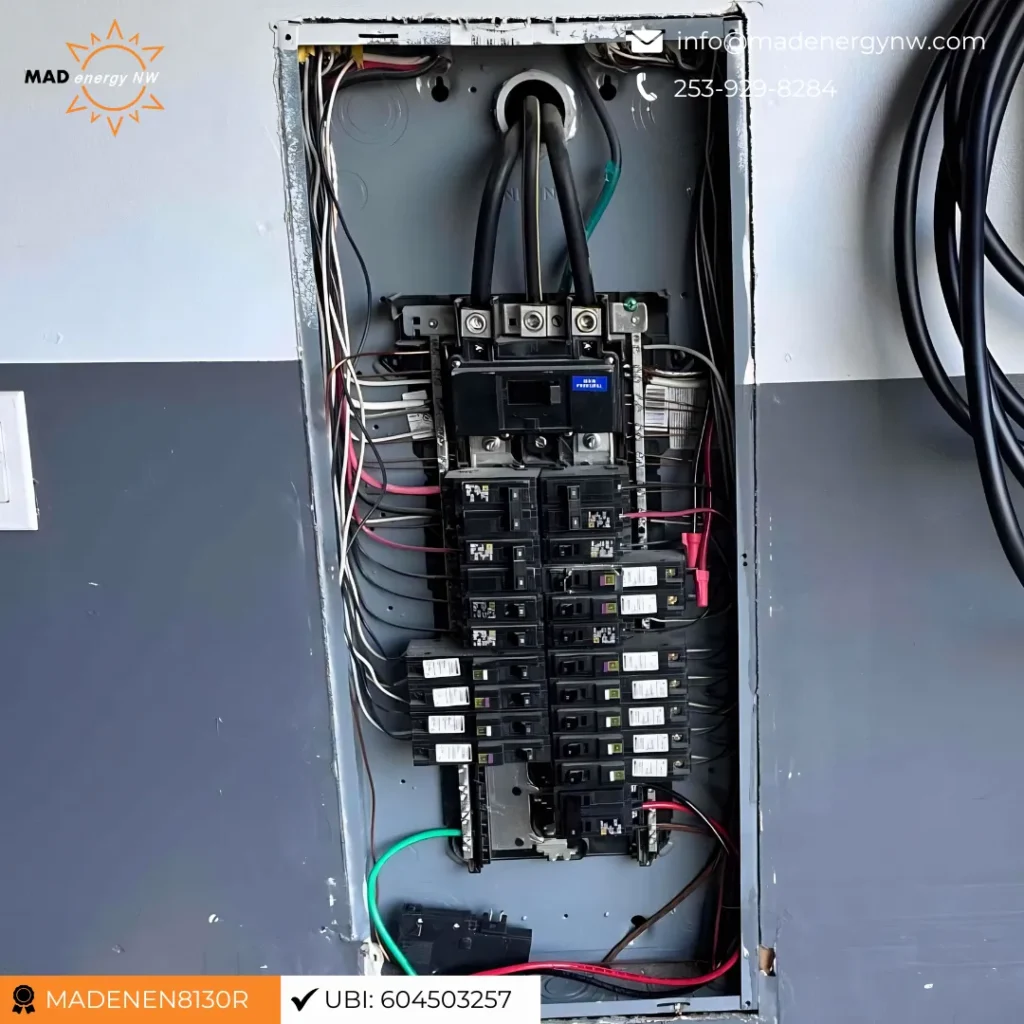
Every circuit in your home has a fixed capacity. Exceeding it causes wiring to overheat and breakers to trip. Effective electrical circuit overload repair starts with diagnosing why your system is struggling and taking the right steps to fix it for the long haul. As Washington homeowners prepare for heavier electrical loads this May, a proactive approach helps prevent dangerous failures.
Why Circuits Overload
The Mechanics of Amperage Capacity
Standard circuits have a hard limit of 15 or 20 amps. Forcing extra current through those lines creates friction and heat inside your walls. Breakers act as a safety gate. They kill the power the second the load becomes a fire hazard.
Common Warning Signs: Tripping Breakers and Flickering Lights
A breaker that trips once during a storm is normal. A breaker that trips every time you run the microwave and the toaster simultaneously is telling you something. Watch for flickering or dimming lights when high-draw appliances like refrigerators or HVAC systems kick on. Warm outlet covers, a faint burning smell, or buzzing sounds from your panel are all red flags that demand immediate attention.
Dangers of Heat Accumulation and Fire Risks
Heat buildup inside wall cavities is the primary cause of overload-related electrical fires. Wiring insulation degrades under sustained high temperatures, and exposed conductors can ignite surrounding materials. Resolving overloads eliminates this risk and also protects sensitive electronics from brownouts that damage motherboards in modern appliances and computers.
Identifying the Root Causes of a Strained System
Over-utilization and High-Draw Appliances
Space heaters, hair dryers, and window AC units are common culprits. Each of these can pull 1,500 watts or more on its own. Stack two or three on the same 15-amp circuit, and you’ve already exceeded capacity. Spring is the right time to audit which circuits serve which rooms before summer cooling demands ramp up across the Pacific Northwest.
The Hazards of Daisy-Chaining Power Strips
Plugging one power strip into another concentrates enormous demand on a single outlet and circuit. This practice bypasses the safety margins built into your home’s wiring. A single outlet was never meant to serve eight devices at once, regardless of how many power strips you chain together.
Loose Connections and Corroded Wiring
Corrosion or loose wire connections at the breaker or outlet increase electrical resistance, which generates heat even under normal loads. Homes in areas like Auburn and Bellevue with older infrastructure are especially susceptible. These issues are invisible behind walls and inside panels, making professional diagnostics essential.
Immediate Steps to Restore Power Safely
Mapping Your Circuit and Reducing Demand
Before touching your panel, unplug high-draw devices from the affected circuit. Label your breakers if they aren’t already marked so you know exactly which outlets and lights each one controls. Redistribute appliances across multiple circuits to balance the load.
Resetting Breakers and GFCI Outlets
Unplug your high-draw devices first. To restore power, push the tripped breaker handle completely to the off position before switching it back to on. For GFCI outlets, press the reset button until it locks into place. If the breaker immediately pops back or the outlet refuses to reset, stop and call a professional. This suggests a persistent fault that requires a specialized diagnostic.
Long-Term Solutions for Modern Energy Demands
Upgrading Outdated Panels and Infrastructure
Many Washington homes still run on 100-amp panels that were sized for a different era. We install modern, code-compliant panels rated at 200 amps or higher to handle today’s electrical demands. If your panel is manufactured by Federal Pacific Electric or Zinsco, replacement isn’t optional: these brands are known safety hazards.
Dedicated Circuits for EV Chargers and HVAC Systems
A Level 2 EV charger pulls 30 to 50 amps on its own. Heat pumps and modern HVAC systems have similar requirements. These appliances need dedicated circuits with properly sized wiring run directly from the panel, not shared lines with kitchen outlets.
Replacing Obsolete Knob-and-Tube or Aluminum Wiring
Older homes with knob-and-tube or aluminum wiring face compounding risks: degraded insulation, lack of grounding, and materials that simply cannot safely carry modern loads. A full rewire with grounded copper circuits eliminates fire hazards, satisfies insurance requirements, and increases property value.
When to Call MAD Energy NW for Professional Diagnostic Services
Some overload issues are resolved with simple load redistribution. Many don’t. If breakers trip repeatedly, outlets feel warm, or your panel is more than 25 years old, a professional diagnostic is the only safe path forward. We perform thorough system evaluations that go beyond surface-level checks, examining circuit loading, wiring condition, panel integrity, and code compliance across your entire property.
Our team of electricians serves homeowners throughout Washington, from Bellevue to Auburn and beyond, with precision diagnostics and lasting repairs.
Schedule your 10-Point Electrical Safety Evaluation and let us deliver electrical circuit overload repair with precision, down to the wire.