
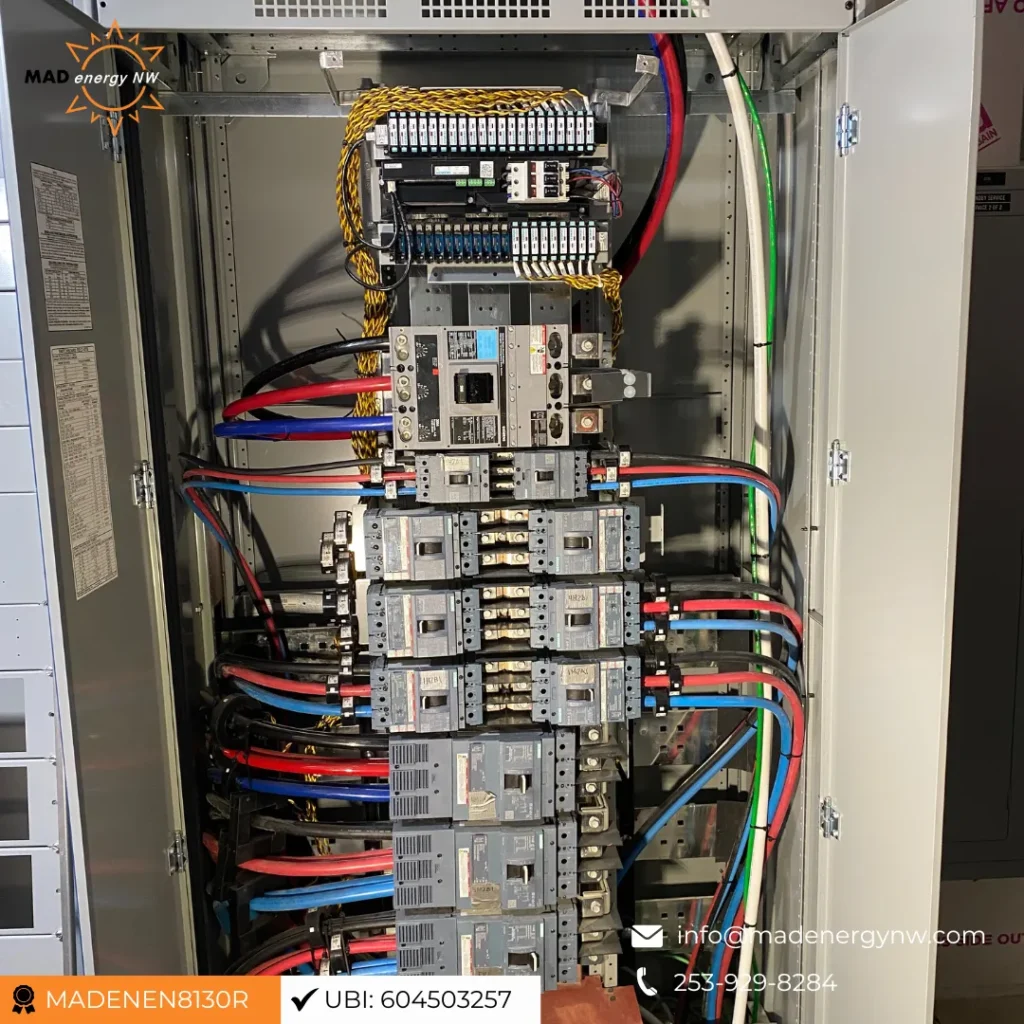
Every residential electrical circuit operates under a strict amperage limit. When the combined electrical draw of household appliances exceeds that capacity, a system overload occurs, resulting in tripped breakers, potential fire hazards, and frustrating power interruptions.
Professional electrical circuit overload repair starts with a precise diagnosis of the failure and the implementation of code-compliant solutions to resolve the issue permanently. This operational strain is especially common across Washington in June, when heavy AC units, portable fans, and dehumidifiers all kick on for the first time, stacking sudden demand onto older circuits that were already struggling during milder months.
What Is an Electrical Circuit Overload?
An electrical circuit overload occurs when the total amperage drawn by devices on a single circuit exceeds the circuit’s rated capacity. A standard 15-amp residential circuit, for example, can safely deliver about 1,440 watts of continuous power. Plug a 1,500-watt space heater and a hair dryer into the same circuit, and you’ve already blown past that threshold. The breaker trips to prevent the wiring inside your walls from overheating, which is exactly what it’s designed to do. The real danger comes when breakers fail to trip or when homeowners repeatedly reset them without addressing the underlying problem.
Common Signs of a Strained Electrical System
Frequent Breaker Trips and Power Interruptions
A breaker that trips once during a heavy-use evening is doing its job. A breaker that trips weekly, or one that trips the moment you start your window AC unit, signals a chronically overloaded circuit. If you’re resetting the same breaker in your Auburn or Bellevue home more than once a month, the circuit needs professional evaluation, not another reset.
Flickering Lights and Dimming During Appliance Start-up
When your kitchen lights dim every time the refrigerator compressor kicks on, that circuit is struggling to meet demand. High-draw appliances like HVAC systems and refrigerators create a momentary inrush current at startup that can be two to three times their running amperage. Persistent dimming indicates the circuit is undersized for the load it carries.
Physical Heat, Buzzing, or Discolored Outlets
Warm outlet covers, a faint buzzing sound from a switch plate, or brown discoloration around an outlet are all signs of excessive resistance and heat buildup. These are not minor annoyances: they are precursors to electrical fires inside wall cavities. If you notice any of these, stop using that outlet immediately and call a licensed electrician.
Primary Causes of Circuit Overloading in Modern Homes
High-Draw Appliances and Over-Utilization
Running a microwave (1,200W), a toaster oven (1,400W), and a coffee maker (900W) on the same kitchen circuit guarantees an overload. Most older homes were wired with far fewer circuits than modern electrical demand requires.
The Hazards of Daisy-Chaining Power Strips
Plugging a power strip into another power strip concentrates massive demand on a single outlet and circuit. This practice violates NEC guidelines and is one of the most common causes of residential electrical fires we see during summer service calls.
Outdated Infrastructure: Knob-and-Tube and Aluminum Wiring
Homes built before the 1970s across the Pacific Northwest often still have knob-and-tube or aluminum wiring. These systems were designed for a fraction of today’s electrical loads. The insulation on knob-and-tube wiring becomes brittle over decades, leaving live conductors exposed. Aluminum wiring expands and contracts with heat cycles, loosening connections and increasing resistance at every junction.
Long-Term Prevention Strategies for a Balanced System
Upgrading Undersized Service Panels
Many Washington homes still operate on 100-amp panels that cannot support modern loads such as EV chargers, heat pumps, and central air conditioning. Upgrading to a 200-amp panel gives your system room to grow and eliminates chronic overloading. This upgrade can also affect your homeowner’s insurance eligibility and property resale value.
Adding Dedicated Circuits for High-Demand Electronics
Your refrigerator, HVAC system, and electric water heater each deserve their own dedicated circuit. We install dedicated 20-amp circuits for high-draw appliances so they never compete with general-use outlets for available amperage.
The Importance of Routine 10-Point Safety Evaluations
MAD Energy NW offers a comprehensive 10-Point Electrical Safety Evaluation that examines panel capacity, wiring condition, GFCI and AFCI protection, grounding and bonding integrity, and circuit loading across your entire home. This proactive inspection catches overloaded circuits, outdated FPE or Zinsco panels, and code violations before they become emergencies. June is the ideal time to schedule one, right as peak summer cooling loads begin to hit.
Professional Diagnostics for Lasting Electrical Safety
Circuit overloads are symptoms, not standalone problems. Behind every tripped breaker is an undersized circuit, aging wiring, or a load distribution issue that will keep recurring until a licensed electrician diagnoses and corrects the root cause. Our team uses precise diagnostic methods, including voltage meters, circuit analyzers, and load-testing equipment, to pinpoint exactly where your system is failing and why. We then implement NEC-compliant repairs: panel upgrades, dedicated circuits, or full rewiring for older homes. If your breakers are tripping this summer, don’t keep resetting them.
Schedule your complimentary evaluation and get your electrical circuit overload repair handled with precision down to the wire.