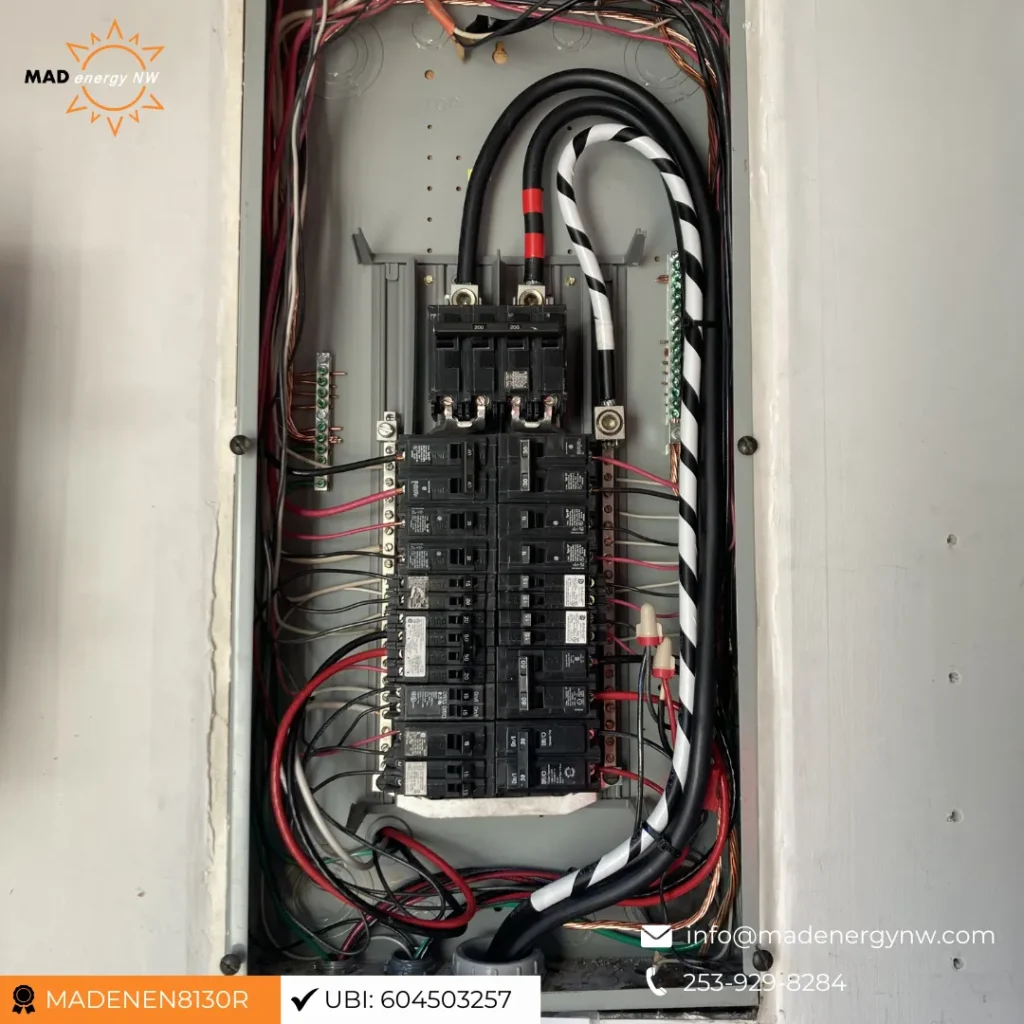
Electrical panels rely on internal components to distribute power safely to each circuit. Homeowners searching for bus bar repair in Auburn WA, often experience repeated breaker trips, loose breakers, or unusual panel behavior. MAD Energy NW evaluates electrical panels and restores proper connections when bus bar damage affects performance.
The bus bar is a conductive metal strip within the panel that carries current from the main supply to individual breakers. When this component deteriorates, power distribution becomes inconsistent. Addressing issues early helps prevent larger electrical problems.
What a Bus Bar Does Inside Your Panel
The bus bar serves as the central distribution pathway for electricity. Breakers connect directly to it, allowing power to flow into each circuit. A solid connection ensures stable electrical performance.
When corrosion or wear develops, breakers may not seat properly. This weakens electrical contact. Poor connections can lead to intermittent power issues.
Signs of Bus Bar Damage
Frequent breaker trips are a common indicator of bus bar problems. Power loss affecting specific circuits may also occur. These symptoms often appear gradually.
Visual signs may include discoloration or burn marks near breakers. Loose breakers that fail to stay firmly in place can also suggest wear. These conditions require inspection.
The “Corrosion Calendar” in the Pacific Northwest
Humidity in the Pacific Northwest gradually affects bus bars. Moisture exposure encourages oxidation, which weakens breaker contact points. This progression often follows a predictable pattern.
Year 0–2: Early Exposure
Minor surface oxidation may begin forming. Electrical performance usually remains stable. No visible symptoms are common at this stage.
Year 3–5: Contact Wear Begins
Light corrosion develops where breakers connect. Breakers may feel slightly loose. Occasional nuisance trips can appear.
Year 6–8: Resistance and Heat Increase
Oxidation thickens and reduces conductivity. Heat buildup may occur at contact points. Homeowners may notice buzzing or intermittent power loss.
Year 9–10: Functional Degradation
Breaker seating weakens further. Frequent trips and localized power interruptions become more common. Visual discoloration may appear around affected breakers.
Copper bus bars generally resist corrosion longer. Aluminum bus bars tend to oxidize faster in humid environments. Regular inspections help detect these changes before performance declines.
How Corrosion Affects Electrical Performance
Corrosion increases resistance at the points where breakers connect to the bus bar. Increased resistance generates heat during operation. Heat can accelerate deterioration.
This cycle may lead to breaker trips or buzzing sounds. In advanced cases, arcing can occur. Addressing corrosion helps prevent further damage.
Heat buildup may also cause breakers to loosen over time. As contact pressure decreases, resistance rises further. This compounding effect can worsen panel performance.
Common Causes of Bus Bar Wear
Loose breakers can damage contact surfaces. Repeated heating and cooling cycles also affect metal components. Overloaded circuits may contribute to deterioration.
Moisture entering the panel area can accelerate corrosion. Oxidation builds over time. Routine inspections help identify these factors.
Frequent breaker removal or repositioning may also affect the bus bar surface. Mechanical wear can reduce contact quality. Maintaining secure connections helps minimize damage.
Why Repairing the Bus Bar Matters
Repairing damaged sections restores proper electrical flow. Improved contact helps breakers function correctly. This reduces interruptions.
Repair may involve cleaning oxidation or securing components. In some cases, replacing affected sections is necessary. Restoring conductivity improves reliability.
Early repair can also prevent additional panel damage. Addressing corrosion before it spreads helps preserve the remaining components. This approach supports long-term performance.
When Replacement Is Recommended
Severe pitting or heavy corrosion may require replacement. Damaged surfaces cannot always be restored fully. Replacement ensures proper breaker seating.
MAD Energy NW evaluates the condition carefully. Compatible parts are installed when needed. This supports long-term performance.
Replacement may also be recommended when multiple breaker positions are affected. Widespread damage can reduce overall panel reliability. Installing new components helps restore a stable distribution.
Preventing Future Bus Bar Issues
Routine panel inspections help detect early wear. Tightening connections reduces movement. Cleaning corrosion helps maintain conductivity.
Proper load management also protects panel components. Balanced circuits reduce heat buildup. Preventive care supports system stability.
Keeping panel areas dry can also help reduce moisture exposure. Minimizing humidity around electrical equipment slows oxidation. Environmental conditions play a role in longevity.
Professional Panel Diagnostics
Bus bar issues often resemble other electrical problems. Accurate diagnosis requires inspection of breakers, wiring, and panel components. Licensed electricians identify the root cause.
MAD Energy NW performs detailed evaluations and code-compliant repairs. Testing confirms proper operation after service. This ensures safe electrical performance.
Further Reading:
- Resilient Backup Power Systems for Properties in the Puget Sound Area
- Spring Wind and Storm Electrical Safety for Western Washington Homes
Restore Reliable Power Distribution
The bus bar plays a central role in distributing electricity safely. Corrosion, wear, or loose connections can disrupt performance. Early repair helps prevent escalating damage.
Contact MAD Energy NW for expert diagnostics and solutions if you need bus bar repair in Auburn WA, to restore safe, dependable panel operation.