
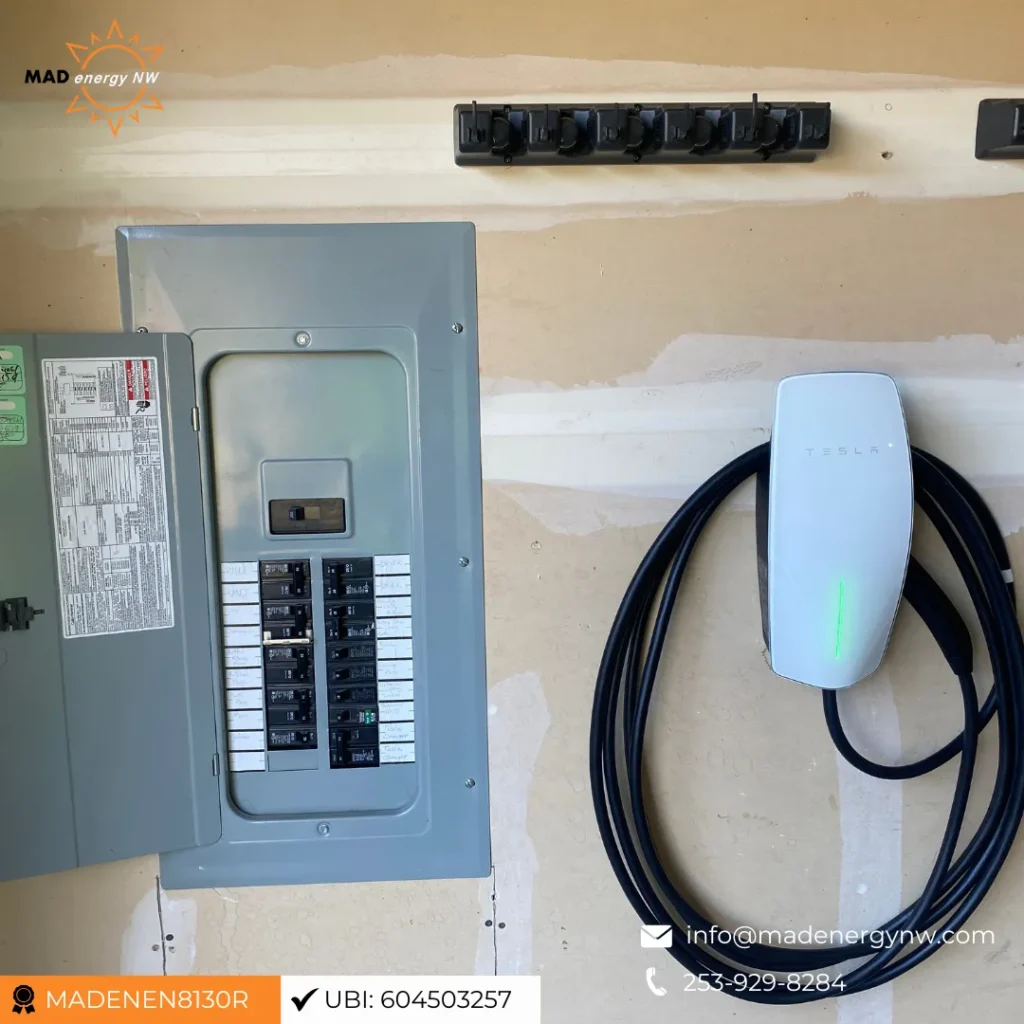
MAD Energy NW works with homeowners in Redmond who rely on home charging systems to keep electric vehicles ready for daily use. During the colder months, some charging systems may behave unpredictably, charging more slowly, stopping unexpectedly, or tripping circuit breakers. These situations often prompt homeowners to look more closely at EV chargers in Redmond, especially when performance changes align with winter weather.
Cold temperatures can place additional stress on electrical systems already operating near capacity. EV chargers depend on stable voltage, secure wiring, and properly rated circuits, all of which can be affected by seasonal conditions. Understanding how winter weather affects charging equipment helps homeowners identify issues early and address them correctly.
How Cold Weather Affects EV Charging Systems
Lower temperatures can influence how electrical components perform. While EV chargers are designed for garage and outdoor environments, winter conditions can exacerbate weaknesses in wiring, circuit breakers, or internal components.
Cold weather may cause materials to contract slightly, which can affect connections that were already worn or loose. Voltage fluctuations can also become more noticeable when vehicles charge overnight while heating systems are running. These conditions do not create new problems but can reveal issues that require professional evaluation.
Common Winter-Related EV Charger Problems
Homeowners may notice several charging issues during the winter months. Chargers may fail to start consistently or stop mid-session without warning. Reduced charging speed can occur when the system struggles to maintain steady power delivery.
Breaker trips are another common concern. When chargers draw high current from undersized circuits or circuits already supporting other loads, winter demand can push the system beyond its limits. Damaged plugs, cables, or connectors may also become more noticeable when insulation stiffens in low temperatures.
MAD Energy NW addresses these issues by determining whether the cause is wiring, breaker capacity, or internal charger components.
The Role of Electrical Panels and Circuit Capacity
EV chargers connect directly to a home’s electrical panel, making the panel’s condition and the circuit’s capacity critical to reliable charging. Older panels or circuits that were not designed for sustained high loads may struggle during winter, when overall electrical demand increases.
Cold weather often coincides with higher household energy use from heating, lighting, and appliances. When an EV charger is connected to a circuit with insufficient capacity, charging performance issues are more likely to occur. A professional evaluation helps determine whether the concern lies with the charger, the circuit, or the panel configuration.
Why Wiring and Connections Matter More in Winter
Secure wiring connections are essential for safe and consistent EV charging. Over time, wiring can degrade due to normal use, environmental exposure, or improper installation. Winter conditions can make these issues more apparent.
Loose or damaged wiring may cause intermittent charging, voltage drops, or breaker trips. MAD Energy NW inspects wiring between the charger and electrical panel to confirm that conductors, grounding, and connections meet safety standards and manufacturer requirements.
Diagnostic Testing Identifies Underlying Issues
EV charger problems during winter often require more than a visual inspection. MAD Energy NW uses diagnostic testing to measure voltage levels, verify grounding, and assess circuit continuity. These tests help pinpoint the source of inconsistent charging behavior.
Testing also confirms whether the charger is operating within manufacturer specifications. This process allows electricians to determine whether a repair, component replacement, or system upgrade is the most appropriate solution without making assumptions.
Repair Versus Upgrade Considerations
Some winter charging issues stem from aging or incompatible equipment. Older chargers may not support newer vehicle charging requirements or may lack features that improve reliability. In these cases, upgrading to a modern charger can improve charging consistency.
MAD Energy NW evaluates whether repair or replacement is the safest and most effective option. Upgrades are completed with careful attention to wiring, breaker sizing, and code compliance, ensuring charging systems operate reliably in all seasons.
Code Compliance and Safety During Cold Weather Use
EV chargers must meet Washington State electrical codes and manufacturer specifications to operate safely. Winter conditions increase the importance of compliance, as systems may run for longer periods and handle higher loads.
MAD Energy NW performs all EV charger repairs and upgrades in accordance with applicable codes. Licensed electricians verify that grounding, wiring, and breaker configurations support safe charging under winter conditions.
Reliable Charging Through Seasonal Changes
EV chargers are an essential part of daily transportation for many Redmond homeowners. Cold weather does not have to result in unreliable charging, but it does require attention to electrical infrastructure and system condition.
MAD Energy NW provides repair and diagnostic services that help homeowners understand how winter affects their charging systems. Addressing electrical issues early helps ensure reliable charging throughout the colder months.
Further Reading:
- Solar Panel Installation in Redmond for Homes With EV Charging Needs
- EV Charging Installation Considerations for Condos and Commercial Properties
Keeping EV Charging Consistent in Winter
Cold weather can expose wiring faults, circuit limitations, and component wear that affect charging performance. Professional inspection and repair help ensure EV charging systems operate safely and consistently during colder months.
Contact MAD Energy NW to request a professional service for EV chargers in Redmond.